How Local in-House Solar Crews Cut Months Off Your Project
Solar installers in Murrieta are busy. Electric rates keep changing, more people are adding battery storage, and many homeowners are trying to get solar in place before late-year bill spikes. All of that means longer lines at city desks and with the utility.
One big factor you can control is the kind of company you choose. There is a big difference between a solar sales company that sends your project to random subcontractors and a direct installer with an in-house team. When everything is handled under one roof, it is easier to keep your project moving, catch mistakes early, and keep you in the loop.
We want to walk through a realistic week-by-week example of how a typical Murrieta solar install can go when you work with a local, in-house crew. We will show where delays usually happen, what parts are outside anyone's control, and how a direct installer can often cut weeks off your total timeline.
What Really Slows Down Solar Installs in Murrieta
Most slowdowns do not happen on the roof. They happen on paper and in email inboxes.
Common bottlenecks for solar installers in Murrieta include:
- Slow handoffs between sales companies and outside installers
- Plan sets with mistakes that trigger permit corrections
- Backed-up city or county permit desks
- HOA reviews that start late or with missing forms
- Utility interconnection queues once your system is built
When a project is split between several outside subcontractors, there is more room for finger-pointing. One group promises one date, another has a different schedule, and your project sits. This is especially true in late summer, when many homeowners rush to get solar finished before holiday season and end-of-year bills.
It helps to know which delays can be controlled and which cannot. Controllable items include:
- Accurate designs and clean, complete permit packages
- Clear photos, notes, and measurements from the site visit
- Inspection prep so the system is ready the first time
- Good communication so you know what is happening and when
Less controllable items are city office closures, staff shortages, or utility backlogs. But even with those, a well-organized, in-house team can submit correct documents early, respond fast to questions, and keep your project at the front of the line whenever possible.
Weeks 1–3: Design, Site Visit, and Fast-Track Permitting
The first three weeks set the tone for the whole project. A strong start often means a smoother finish.
In Week 1, you typically have an in-home or virtual consultation. At this stage, we:
- Review your recent electric bills and usage patterns
- Talk about your goals, like backup power or bill stability
- Look at your roof orientation and basic shading from maps
- Set a time for a detailed site visit
With a direct installer, licensed in-house professionals handle both the education and the technical review. You are not dealing with a commission-only sales rep who disappears once the contract is signed.
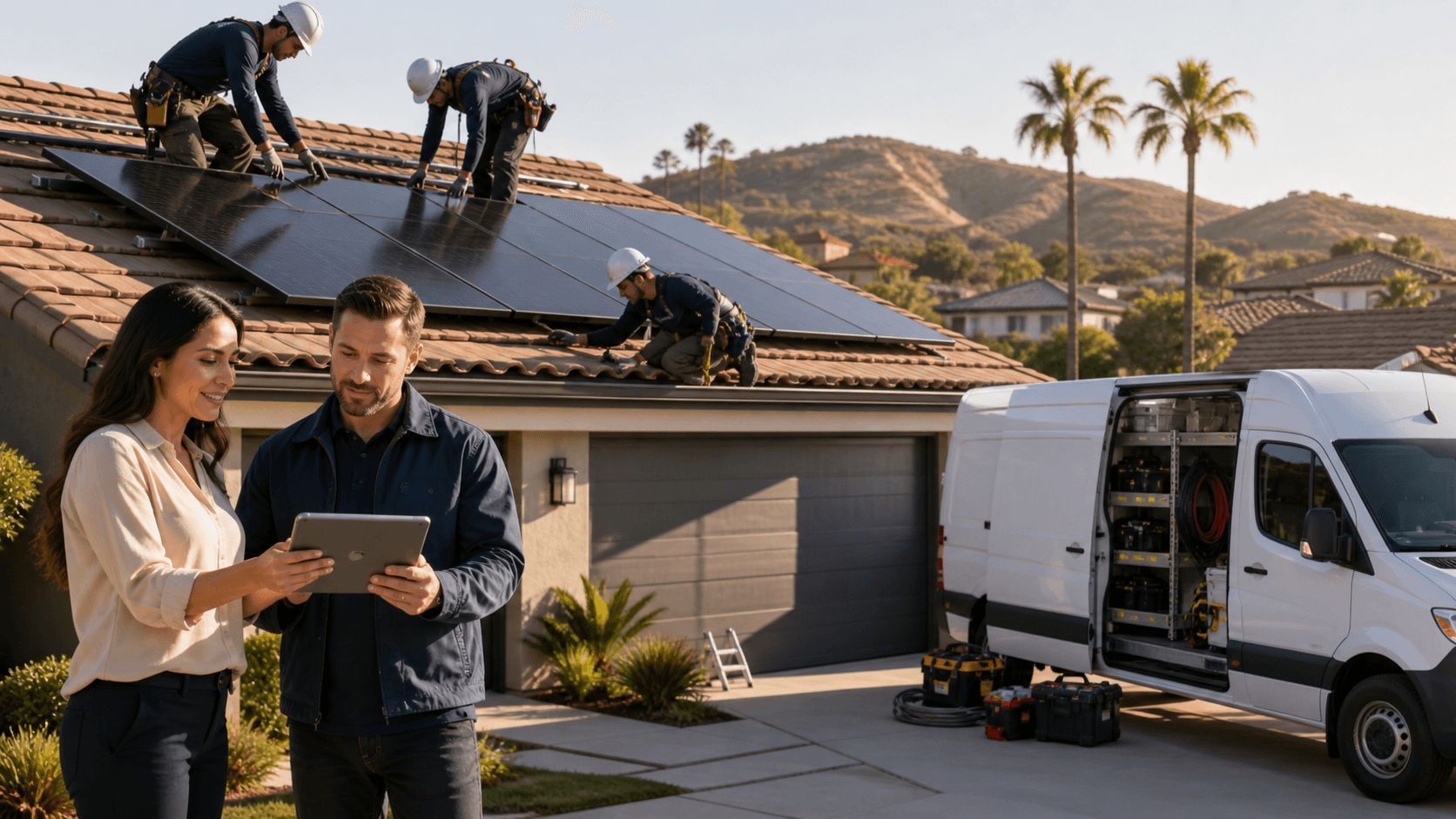
In Week 2, we send an in-house technical team to your home. This is usually the same type of crew that will later design and install your system. During this visit we focus on:
- Roof condition and layout
- Electrical panel size and space
- Shading and nearby trees or structures
- Battery readiness and safe equipment locations
Because the people on site understand both design and construction, they know which details matter for permitting and inspection. That means fewer surprises later.
In Week 2 and Week 3, our in-house designers take those field notes and turn them into final stamped plans. At the same time, we prepare:
- Permit documents for the City of Murrieta or nearby jurisdiction
- Any required structural or electrical details
- HOA paperwork, if your neighborhood needs it
Keeping this work inside one company greatly lowers the risk of permit rejections or resubmissions. Less organized solar installers in Murrieta often lose 2 to 4 extra weeks in this stage because someone missed a document or drew a detail that does not match local expectations. Our local experience in Murrieta, Temecula, and the rest of Southwest Riverside County helps us get it right more often on the first try.
Weeks 4–7: Scheduling, Installation Day, and Inspection Prep
Once permits are approved, the focus shifts to scheduling and installation.
In Week 4 and Week 5, our internal scheduling team coordinates around:
- Your preferred days
- Local weather patterns
- Material delivery timing
Because crews are in-house, we are not waiting on an outside subcontractor that may already be booked for months. That helps keep your install on track and out of the late-season rush when days are shorter and calendars are packed.
In Week 5 and Week 6, most residential systems in Murrieta take one to three days to install. The same company handles:
- Roof mounting and attachments
- Solar panel placement and wiring
- Electrical work at the main panel
- Battery storage installation, if included
Everyone on the crew is trained to work together, since they are part of the same team every day. This leads to consistent workmanship and cleaner job sites.
By Week 6 and Week 7, we move into system testing and inspection prep. The crew that installed your system also:
- Tests each circuit and safety device
- Labels equipment so it matches local inspector preferences
- Takes photos and documents any details the city or county may ask about
Because licensed in-house electricians know how local inspectors like to see conduit runs, labeling, and battery placement, we can often pass inspections on the first visit. If a small adjustment is needed, the same local crew can return quickly instead of waiting for a subcontractor to find space in a crowded schedule.
Weeks 8–10: Final Inspection, Utility Approval, and Turn-On
The last stretch is where many homeowners get impatient, and that is understandable. Your system is on the roof, and you want it working.
In Week 8, the city or county final inspection is scheduled. Our team:
- Confirms the date and time with you
- Meets the inspector when needed
- Handles minor field changes on the spot, if requested
Once the inspector signs off, the project shifts to the utility. In Week 8 and Week 9, the electric company reviews the interconnection application. During late summer and early fall, many projects hit the queue at once, which can slow things down. A clean and accurate application helps avoid extra back-and-forth that can push your turn-on date out even farther.
By Week 9 and Week 10, Permission to Operate, often called PTO, is usually granted. At that point we:
- Confirm your system is reporting correctly
- Walk you through the monitoring app
- Explain basic battery operation, if you have storage
- Review what to expect on your next few bills as daylight hours change
Working with a long-standing local company matters a lot in this stage and beyond. Maintenance, cleanings, and warranty work are handled by our own crews, so you are not left hunting for someone new years down the road.
How to Choose Faster, Reliable Solar Installers in Murrieta
If you want a smoother, more predictable timeline, it helps to ask the right questions up front. A quick checklist for solar installers in Murrieta includes:
- Are you a direct installer, or only a sales organization?
- Do you use in-house installation crews, or subcontract everything?
- How many projects have you completed in Murrieta and nearby cities?
- Who handles design, permitting, and inspection prep?
It is also smart to verify licensing, insurance, and any relevant certifications for solar and battery work in California. Review the workmanship warranty and equipment warranties so you know who stands behind the job. The goal is to make sure the company, not a third-party subcontractor, is responsible for service.
Local presence matters too.
- A nearby office or shop
- Real references from the area
- A team that plans to be in the community for years
As a Temecula-based direct installer, Transform Power® uses fully in-house crews for design, installation, repair, and cleaning. That local model and clear accountability help many Murrieta homeowners move from first consult to PTO in roughly eight to ten weeks, assuming normal city and utility processing, with fewer surprises along the way.
Get Started With Your Project Today
If you are ready to lower your energy bills and take control of your power, our expert solar installers in Murrieta are here to help you design the right system for your home. At Transform Power, we walk you through every step, from evaluation and design to installation and follow-up support. Reach out today through our contact page so we can answer your questions and schedule a no-pressure consultation. Together, we will create a solar solution that fits your needs and budget.